The Broken Equipment Corner: How an Overlooked Storage Habit Is Exposing Your Facility to Serious Liability

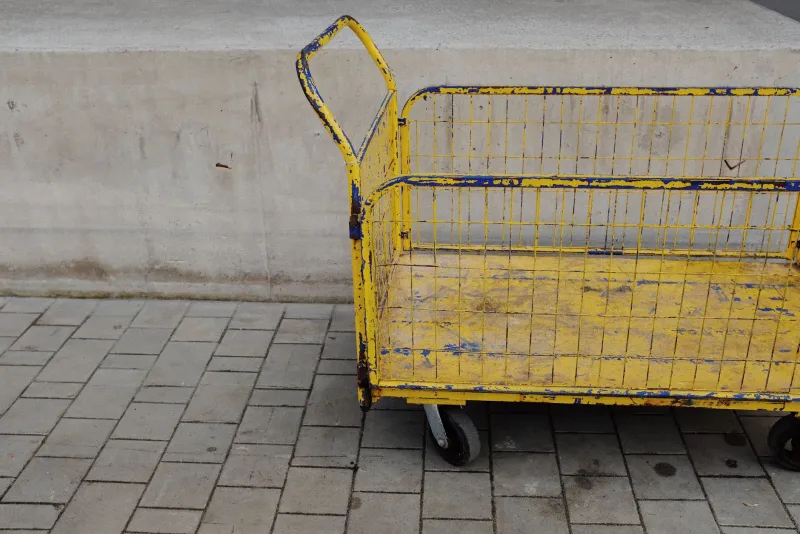
Every facility manager knows the spot. It might be a cordoned-off section near the loading dock, a seldom-visited aisle at the back of the warehouse, or a fenced enclosure that was originally designated for "temporary" storage. Over time, it fills with broken carts, damaged racks, and equipment waiting on repair parts that may never arrive. The informal name varies—the graveyard, the bone yard, the dead zone—but the underlying problem is consistent: unmanaged accumulation of failed equipment creates compounding risks that most organizations fail to fully account for.
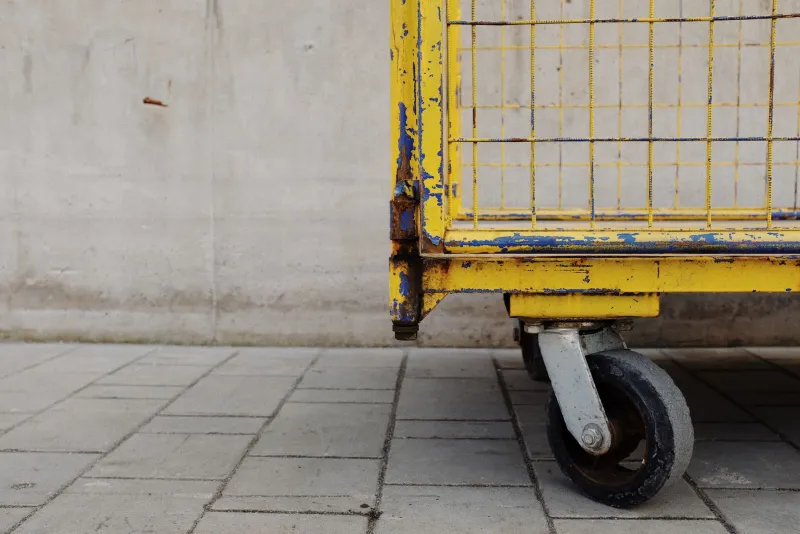
Casters, in particular, tend to be the most underestimated hazard in these areas. Cracked wheels, seized swivel heads, and broken mounting plates may look like inert debris, but they represent a cluster of legal, insurance, and operational exposures that can materialize without warning.
How the Accumulation Starts
The broken equipment zone rarely emerges from a deliberate decision. It evolves. A cart develops a wobble, gets pulled from rotation, and sits near the dock while maintenance prioritizes higher-urgency repairs. A second cart follows, then a third. Within a few months, the area has grown into an informal dumping ground with no inventory, no accountability, and no clear plan for disposition.
This pattern is reinforced by resource constraints. Maintenance teams operating under tight schedules often lack the bandwidth to formally process failed equipment. Disposal procedures may be unclear or bureaucratically burdensome. Replacement parts may be on back order. And so the pile grows, largely invisible to anyone outside the immediate work area—until something goes wrong.
The casters on that accumulating equipment don't become safer with time. In fact, the opposite is true. Wheels that have already failed structurally continue to degrade. Lubricant dries out. Corrosion spreads. A caster that was merely worn when it entered the broken equipment zone may become genuinely dangerous several months later when a worker attempts to move the cart manually or cannibalize it for parts.
The Legal Exposure You May Not Have Mapped
From a regulatory standpoint, unmanaged equipment accumulation can trigger violations under multiple frameworks. OSHA's General Duty Clause (Section 5(a)(1)) requires employers to provide workplaces free from recognized hazards. An area filled with damaged equipment—especially mobile equipment with compromised rolling components—can reasonably be characterized as a recognized hazard, particularly if workers access the area regularly.
Beyond OSHA, state-level workplace safety regulations in many jurisdictions impose additional requirements around housekeeping, aisle clearance, and equipment condition. Facilities in California, for example, face Cal/OSHA standards that are often more stringent than federal baselines. A broken equipment zone that obstructs egress routes or encroaches on marked walkways could constitute a violation independent of any incident.
The workers' compensation dimension is equally significant. When an injury occurs in or near a broken equipment zone—whether from tripping over a damaged cart, being struck by unsecured equipment, or attempting to operate a unit with a compromised caster—the existence of the zone itself can be used to establish negligence. Insurers conducting loss control reviews increasingly flag these areas as indicators of broader safety culture deficiencies, which can affect premium calculations and coverage terms.
Why Casters Specifically Deserve Attention
Among the components that fail on industrial equipment, casters are disproportionately responsible for instability and unpredictable movement. A cart with a locked swivel or a shattered wheel is not simply stationary—it is unpredictably mobile. Partial caster failures can cause equipment to veer, tip, or resist directional control in ways that are difficult to anticipate, particularly in low-light or congested areas.
When damaged equipment is stored in a broken equipment zone without immobilization, it remains subject to incidental contact from passing forklifts, foot traffic, or other moving equipment. A cart with one functioning and three compromised casters can shift unexpectedly when nudged, creating a collision or tip hazard that injures workers who had no direct interaction with the unit.
Furthermore, the practice of cannibalizing casters from broken equipment—removing functional wheels from one cart to repair another—introduces its own risks. Without proper documentation, facilities lose track of which units have been partially stripped, which casters have been redeployed, and whether any of those components met the load and application specifications of their new host equipment. The result is a shadow inventory of mismatched, unverified hardware circulating through the facility.
Building a System That Replaces the Graveyard
The goal is not to eliminate a staging area for failed equipment—some form of holding zone is operationally necessary. The goal is to replace an unmanaged accumulation with a structured, documented system. The following framework addresses the core deficiencies that turn broken equipment zones into liabilities.
Establish formal intake procedures. Every unit entering the broken equipment zone should be logged with a date, a description of the failure mode, and an assigned disposition status: repair, cannibalize for parts, or dispose. This prevents indefinite accumulation and creates an audit trail that demonstrates active management.
Immobilize all units upon entry. Equipment with compromised casters should be blocked or chocked immediately upon placement in the holding area. This eliminates the risk of unintended movement and removes the ambiguity about whether a unit is safe to approach.
Set maximum hold times. A unit that has been in the broken equipment zone for more than 30 or 60 days without a defined repair plan should be automatically escalated for disposition review. Allowing equipment to age indefinitely in a holding area is the primary mechanism by which informal graveyards form.
Maintain a caster-specific parts inventory. Many repair delays stem from uncertainty about which replacement casters are on hand. A basic inventory of commonly used wheel and caster assemblies—organized by load rating, wheel diameter, and mount type—dramatically reduces the time between equipment failure and return to service.
Conduct regular zone audits. The broken equipment area should be included in routine facility walkthroughs, not treated as an exception. Auditors should verify that all units are logged, immobilized, and within their designated hold period. Discrepancies should be corrected within a defined timeframe.
The Operational Case for Discipline
Beyond the regulatory and insurance arguments, there is a straightforward operational rationale for managing broken equipment zones more rigorously. Facilities that allow caster failures to accumulate unaddressed are, by definition, operating with a reduced pool of functional equipment. That reduction in available assets creates pressure on the units that remain in service, accelerating wear and increasing the frequency of future failures.
A structured disposition process, by contrast, returns equipment to service faster, recovers usable components more reliably, and generates the data needed to identify recurring failure patterns. If the same caster type is appearing in the broken equipment zone repeatedly, that pattern is only visible if intake records exist to surface it.
The broken equipment corner is not an inevitable feature of industrial facility operations. It is the product of deferred decisions—and like most deferred decisions, it becomes more expensive the longer it remains unaddressed. Transforming that space into a managed, compliant system is one of the more straightforward improvements a facility can make, and one that pays dividends in safety, compliance, and operational efficiency well beyond the square footage it occupies.