Dead Weight: How Discarded Casters Are Quietly Costing Your Facility More Than You Think
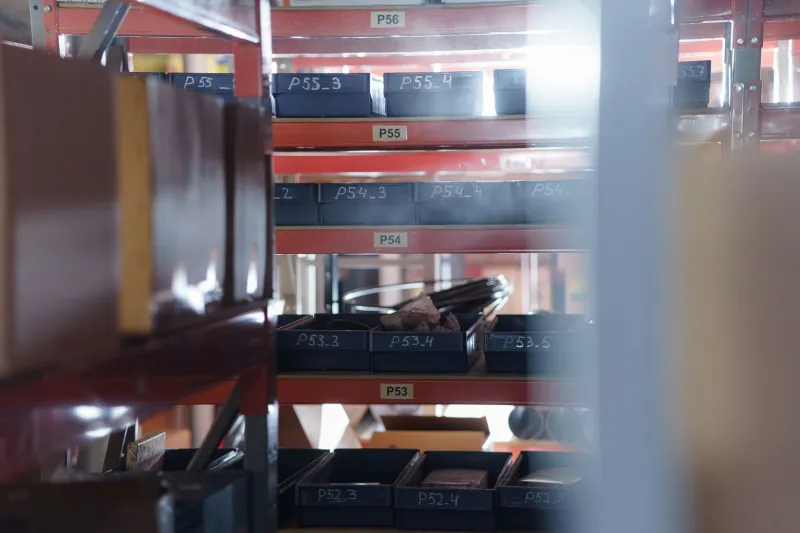
Walk the back corners of almost any warehouse, manufacturing floor, or distribution center in the United States, and you are likely to find them: a plastic bin overflowing with flat-spotted wheels, a shelf lined with rusted swivel assemblies, a cardboard box stuffed with casters that someone once meant to inspect. Nobody ordered them to be kept. Nobody decided they were worth saving. They simply accumulated, the way things do when no formal process exists to handle them.
This phenomenon—the informal accumulation of end-of-life caster hardware—is far more common than most operations managers realize, and the consequences extend well beyond aesthetics. What looks like a clutter problem is, in practice, a symptom of missing infrastructure. Understanding why facilities stockpile dead casters, and what it actually costs them, is the first step toward building a program that stops the cycle.
Why Worn Casters Never Seem to Leave
The accumulation begins innocently enough. A technician removes a failed caster during a routine maintenance call and sets it aside rather than walking it to a disposal point—because no designated disposal point exists. A purchasing manager holds onto a batch of mismatched replacements in case they prove useful later. A floor supervisor pulls a cart out of service and strips the casters before scrapping the cart body, reasoning that the wheels might have some life left.
None of these decisions are unreasonable in isolation. The problem is structural: without a defined end-of-life process, every individual makes a judgment call, and those judgment calls trend toward keeping rather than discarding. The result is a slow but steady accumulation of hardware that occupies space, consumes attention, and contributes nothing to operations.
In larger facilities, the scale of this accumulation can be striking. It is not unusual for a mid-sized distribution center to have dozens—sometimes hundreds—of removed casters in various states of disrepair, spread across multiple storage areas with no consistent labeling or condition documentation.
The Hidden Costs Nobody Is Tracking
The direct costs of holding dead casters are easy to underestimate precisely because they are diffuse. No single line item on a budget captures the full picture. But when the components are examined individually, the aggregate becomes difficult to ignore.
Storage space is the most obvious cost. Industrial shelving and floor space in active facilities carry real value, whether measured in lease cost per square foot or in opportunity cost against productive use. A bin of unsalvageable casters occupying four square feet of prime shelving near a maintenance station is space that cannot hold certified spare parts, lubricants, or tools.
Inventory confusion is subtler but often more damaging. When worn casters and serviceable spares share the same storage area without clear segregation, technicians cannot reliably identify what is usable. This leads to one of two failure modes: a technician installs a compromised caster believing it to be a good spare, introducing a premature failure into an active cart or dolly; or a technician wastes time inspecting and re-inspecting accumulated hardware to find something usable, consuming labor that could be directed elsewhere.
Safety exposure rounds out the picture. Casters with cracked wheels, seized bearings, or bent yokes are not inert objects. In a busy facility, unsecured hardware in bins or on shelves can shift, fall, or create trip hazards. A flat-spotted polyurethane wheel may look stable until it rolls off a shelf during a forklift pass. These are not hypothetical risks; they are the kind of incidents that generate OSHA recordables and workers' compensation claims.
Recognizing the Scope of the Problem in Your Own Facility
Before building a solution, it is worth conducting an honest audit of current conditions. This does not require a formal project—a single walkthrough with a clipboard will usually reveal enough to justify action.
During the assessment, note every location where removed or worn casters are being stored, even temporarily. Estimate quantities and observe whether any labeling or condition documentation exists. Ask maintenance staff where they place casters after removal and what criteria, if any, they use to decide whether a caster goes to storage or disposal.
In most facilities, this exercise surfaces two findings: the volume of accumulated hardware is larger than management expected, and the criteria for storage versus disposal are entirely informal, varying by individual rather than by policy.
Building an End-of-Life Caster Management Program
A functional end-of-life program does not require significant investment. It requires clarity—clear criteria, clear locations, and clear accountability.
Define disposition criteria at the point of removal. The moment a caster is pulled from service is the moment its fate should be decided. Technicians need a simple framework: if the wheel is cracked, chunked, or flat-spotted beyond a defined threshold, it is scrap. If the swivel assembly is seized or the yoke is deformed, it is scrap. If the hardware is merely dirty or in need of lubrication and the structural components are sound, it may be a candidate for refurbishment. Anything that does not meet a clear serviceability standard goes directly to disposal, not to a holding shelf.
Designate and label separate physical locations. Serviceable spare casters and end-of-life casters must never share the same space without explicit segregation. A clearly labeled scrap bin—ideally located near the maintenance area but distinct from spare parts storage—removes the ambiguity that drives accumulation. When the bin is full, it is emptied. The process is repeatable.
Establish a disposal cadence. Scrap casters should not wait indefinitely for a disposal event. Depending on facility size and caster replacement volume, a weekly or biweekly scrap purge is typically sufficient. Assign ownership of this task to a specific role rather than leaving it to whoever notices the bin is full.
Explore material recovery where applicable. Depending on wheel material and local recycling infrastructure, some caster components may qualify for metal or polymer recycling programs. Steel yokes and mounting plates are frequently accepted by scrap metal processors. Polyurethane and rubber wheels are more variable, but worth investigating. Recovering even modest value from scrap hardware reinforces the discipline of timely disposal.
Document the program and train accordingly. A policy that exists only in a supervisor's memory is not a policy. A one-page procedure covering removal criteria, storage locations, and disposal cadence—posted in the maintenance area and included in onboarding materials—converts informal practice into institutional standard.
From Accumulation to Accountability
The facilities that manage caster hardware most effectively are not necessarily the ones with the most sophisticated systems. They are the ones that treat end-of-life hardware with the same intentionality they apply to procurement and installation. A caster that has reached the end of its service life is not a potential asset—it is a liability waiting to be converted into a cost if it is not removed from the system promptly and properly.
Building that discipline is not complicated. It requires only the recognition that the informal accumulation happening in back corners and on unlabeled shelves is not a neutral condition. It is a choice—and it is one that facilities can make differently, starting with the next caster that comes off the floor.