The Backup Caster Illusion: How Emergency Reserves Become Expensive Shelf Decoration
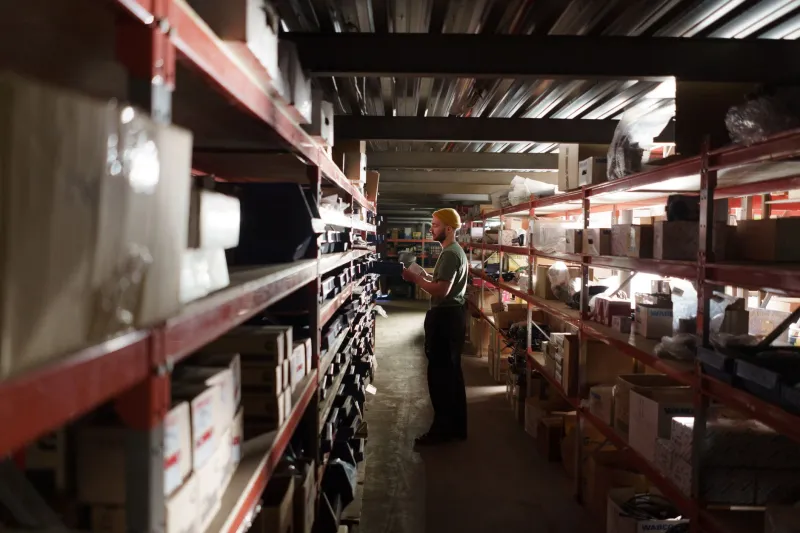
There is a particular shelf in nearly every large facility in America. It holds casters. Some are still in their original packaging. Others are loose, slightly dusty, and missing the paperwork that once identified their specifications. All of them were purchased with urgency in mind. And almost none of them have been touched since.
This is the backup caster reserve—a procurement habit built on sound instincts but executed in ways that quietly drain maintenance budgets, distort inventory records, and create a false sense of operational readiness. Understanding how these reserves form, why they stagnate, and what they genuinely cost is essential for any facility manager serious about running a lean, responsive operation.
How the Reserve Gets Built in the First Place
The logic behind emergency caster stockpiles is not irrational. Equipment downtime is expensive. When a critical cart, dolly, or platform truck fails mid-shift, the cascading effects—stalled production lines, delayed shipments, frustrated workers—can cost far more than a handful of replacement wheels. Purchasing a buffer stock feels like responsible planning.
The problem is that this logic rarely includes a defined consumption model. Procurement teams order based on fear of shortage rather than historical usage data. A maintenance supervisor who once waited three weeks for a specialty caster during a supply chain disruption will often authorize a purchase of ten units to prevent that experience from recurring. That decision is understandable. But without a rotation system, those ten units may sit for years.
Over time, individual purchasing decisions compound. Different supervisors, different departments, and different budget cycles all contribute their own emergency reserves. What began as a sensible buffer evolves into an uncoordinated accumulation of mixed specifications, duplicate wheel types, and hardware that may no longer match current equipment.
The Psychology of 'Just in Case'
There is a well-documented behavioral pattern in inventory management sometimes called safety stock bias—the tendency to overestimate the probability of shortage and underestimate the cost of carrying excess inventory. In the context of casters, this bias is amplified by several factors specific to industrial environments.
First, caster failures tend to be memorable. A single breakdown that halts a production line leaves a strong impression on the people responsible for preventing it. That memory drives precautionary purchasing long after the immediate risk has passed.
Second, casters are relatively inexpensive on a per-unit basis, which makes it easy to rationalize over-ordering. Spending an extra few hundred dollars on backup wheels feels negligible compared to the cost of a production halt. What facilities rarely calculate is the aggregate carrying cost of dozens of such decisions made independently across departments over multiple years.
Third, emergency reserves provide psychological comfort. The presence of a stocked shelf signals preparedness, even when the contents of that shelf are poorly catalogued, incompatible with current equipment, or approaching the end of their useful storage life.
What Emergency Casters Actually Cost
Calculating the true carrying cost of idle caster inventory requires looking beyond the original purchase price. Several cost categories deserve attention.
Capital tied up in unused stock. Money spent on casters sitting on a shelf is money not available for other operational investments. Depending on your facility's cost of capital, even modest reserves represent a measurable drag on financial performance.
Storage space. Shelf space in a warehouse or maintenance room is not free. When that space is occupied by casters that will never be used, it displaces items with active turnover. In high-cost real estate markets—think distribution centers near major metropolitan areas—this cost can be surprisingly significant.
Degradation over time. Casters are not immune to shelf aging. Polyurethane wheels can harden or develop flat spots when stored improperly. Rubber compounds degrade in environments with temperature swings or UV exposure. Bearings can corrode. A caster that has been sitting on a shelf for three years may perform significantly worse than a new unit, creating a false sense of security when it is finally pressed into service.
Administrative overhead. Someone has to count, label, and track reserve inventory—or deal with the consequences of not doing so. Misidentified casters, lost specifications, and duplicate purchases all generate administrative costs that accumulate quietly.
Obsolescence risk. Equipment fleets change. When facilities retire older carts and introduce new platforms with different mounting configurations or load requirements, previously stockpiled casters may become permanently incompatible. This is not a hypothetical scenario; it is a common outcome in facilities that refresh equipment on a five-to-ten-year cycle.
Why the Reserves Never Get Deployed
Perhaps the most revealing question is not why facilities accumulate backup casters, but why those casters so rarely get used even when failures occur.
In many cases, the emergency reserve is simply not findable at the moment it is needed. Inventory is inconsistently labeled. The person who knows where the backup stock is stored is not on shift. Or the reserve exists in a separate building from the equipment that has failed.
In other cases, maintenance technicians are uncertain whether the stockpiled caster matches the failed unit's specifications closely enough to be a safe substitute. Rather than risk an incompatible installation, they place an order for a confirmed replacement—leaving the reserve untouched once again.
This dynamic reveals a structural problem: emergency reserves are useful only when they are accessible, accurately documented, and verified as compatible with current equipment. Without those conditions, the reserve is not a safety net. It is a sunk cost.
Building a Reserve That Actually Functions
The goal is not to eliminate safety stock entirely. Some level of buffer inventory is genuinely prudent, particularly for facilities with long lead times on specialty casters or limited access to same-day suppliers. The goal is to make that reserve functional rather than decorative.
Tie reserve quantities to actual consumption data. Review maintenance records to identify which caster types your facility replaces most frequently. Build reserves around those high-turnover items, not around worst-case scenarios that have never materialized.
Establish a first-in, first-out rotation. Treat caster reserves the way a well-run kitchen treats perishables. New stock goes to the back; older stock gets used first. This prevents degradation and ensures that backup inventory reflects current specifications.
Audit compatibility annually. Each time your equipment fleet changes, review your reserve stock for compatibility. Casters that no longer match any active equipment should be liquidated, repurposed, or disposed of rather than retained indefinitely.
Centralize documentation. Every item in your emergency reserve should be tagged with its specifications, purchase date, and compatible equipment list. This investment in organization pays dividends the moment a midnight equipment failure requires a fast, confident response.
Set a maximum reserve threshold. Define an upper limit for backup inventory by caster type and enforce it. When stock exceeds that limit, pause purchasing until consumption brings levels back into range.
Turning a Cost Center Into a Competitive Advantage
A well-managed caster reserve is not just a cost reduction opportunity—it is an operational differentiator. Facilities that can respond to equipment failures in minutes rather than days maintain higher throughput, better workforce morale, and stronger compliance records. The key is ensuring that the reserve is built around real data, maintained with genuine discipline, and reviewed on a regular cadence.
The casters gathering dust on your facility's emergency shelf are not protecting you. They are costing you. Replacing the illusion of preparedness with a structured, data-driven approach to backup inventory is one of the more straightforward ways to recover value that most facilities are currently leaving on the table.